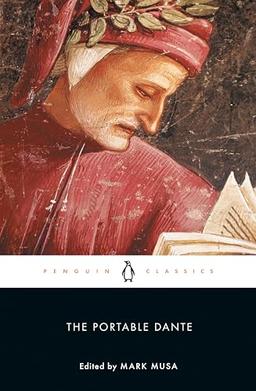
Best for mostMark Musa · 1995
Mark Musa's Penguin translation is the one I'd start with — unrhymed, plain, and clear, with notes that explain Dante's dense web of references without burying you. Dante is hard enough; Musa keeps the language simple so the poem comes through. The Portable Dante gathers the whole Comedy in one volume. This is where I'd start.
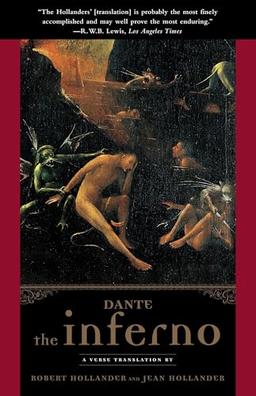
Best for going deepRobert & Jean Hollander · 2007
Robert and Jean Hollander's translation has the best notes in English, full stop — a running commentary that turns the poem into a guided tour of medieval theology, politics, and gossip. The catch: it's three separate volumes, so it's an investment of money and shelf space. The version for readers who want to go all the way in.
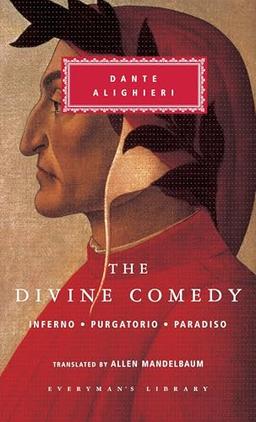
Most poeticAllen Mandelbaum · 1982
Allen Mandelbaum's verse is widely called the most beautiful and the most faithful of the modern translations, and the Everyman's edition gathers all three canticles in one handsome volume with Botticelli's illustrations and notes after each canto. The poetry-first choice that's also a lovely object.
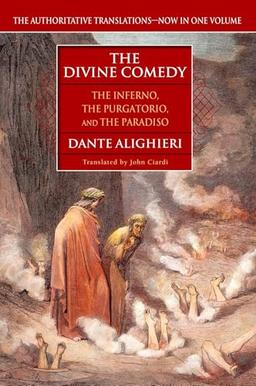
Best rhymedJohn Ciardi · 1970
John Ciardi's mid-century version is the best of the rhymed translations — it keeps a music the unrhymed versions give up, taking some liberties to do it. His notes are analytical, not just explanatory, and it's available complete in one volume. The choice if you want Dante to sound like poetry in English.
Dante AlighieriThe Divine Comedytr. Henry Wadsworth Longfellow
Henry Wadsworth Longfellow · 1867
Henry Wadsworth Longfellow's 1867 translation — the first major American Dante — is out of copyright and free. It's faithful and stately, in a 19th-century English grander than the modern versions. Complete and free; a fine way to read the poem before choosing an annotated edition.