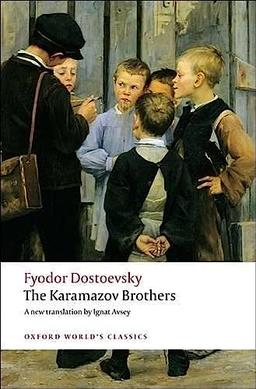
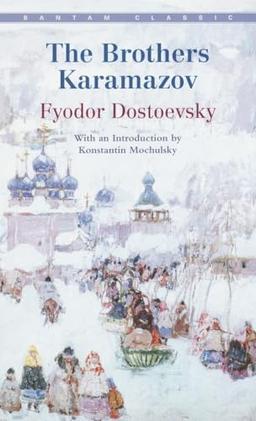
Best for mostIgnat Avsey · 1994
For a first read, this is the one I'd hand you. Avsey writes in idiomatic modern English that moves, and the Oxford edition opens with a character chart and a guide to the Russian names and nicknames — which, in a novel where everyone has three names, is worth more than it sounds. He titles it 'The Karamazov Brothers,' closer to the Russian. Looser than P&V, and the better way in. This is where I'd start.
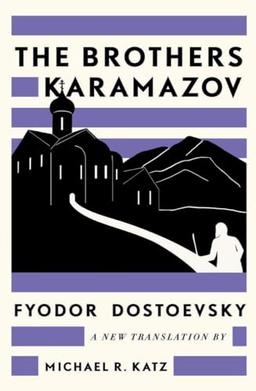
NewestMichael R. Katz · 2023
The 2023 translation, by the same Michael Katz whose Crime and Punishment drew raves. It's the freshest version in print, and some readers already rank it first — clear, modern, accurate. The hardcover is the splurge of the group. If you want the newest scholarship and don't mind the price, this is it.
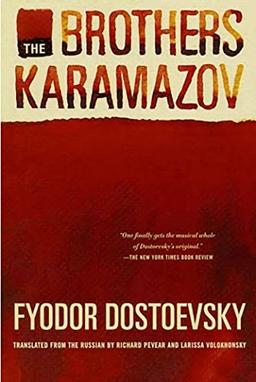
Most faithfulPevear & Volokhonsky · 1990
Pevear and Volokhonsky's 1990 version won the PEN translation prize and is the one scholars most often cite — it keeps the texture and oddness of Dostoevsky's Russian rather than smoothing it. The flip side is what some readers feel as choppiness. If you already know the book, or want the most authentically Russian read, this is the one.
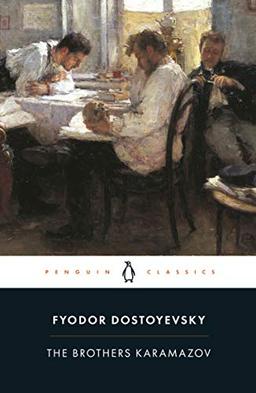
Best balanceDavid McDuff · 1993
David McDuff's Penguin translation is the steady middle — faithful without the friction some hit in P&V, and backed by Penguin's thorough introduction and notes. A safe, well-supported read if Avsey feels too loose and P&V too austere.
The classicConstance Garnett · 1912
Constance Garnett's 1912 translation is how the English-speaking world met the Karamazovs, and it's out of copyright — free online, a few dollars in print. It reads smoothly, if in an Edwardian register that softens Dostoevsky's edges. Complete and cheap; a fine way to start if you don't want to deliberate.