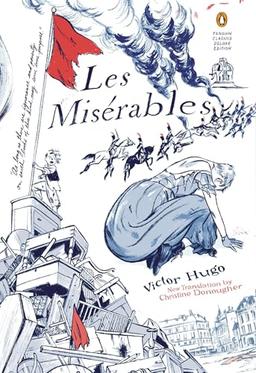
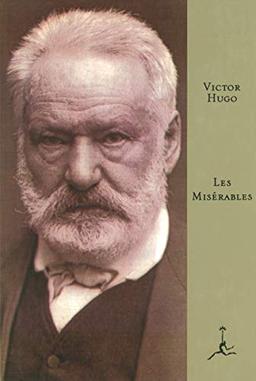
Best for mostChristine Donougher · 2013
Donougher's 2013 translation has quickly become the one most readers point to, and I agree. It's complete, it's modern without sounding modernized, and it keeps Hugo's poetry — the long, surging sentences — while staying easy to follow. The notes are genuinely helpful in a book this dense with history. This is where I'd start.
Most modernJulie Rose · 2008
Julie Rose's version reads like a contemporary novel — fast, vivid, the easiest of the group to fall into. The tradeoff divides people: she modernizes hard, and some of her choices feel anachronistic against Hugo's 1862 French. If readability is everything and fidelity less so, this is the one. If that bothers you, it'll bother you a lot.
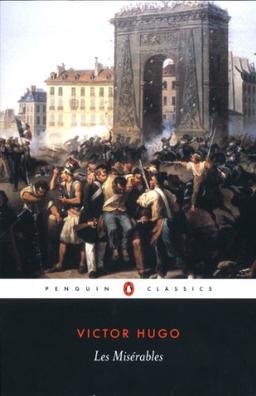
Most readableNorman Denny · 1976
Norman Denny's 1976 Penguin was the standard for a generation — dramatic, very readable, alert to Hugo the playwright. The catch: he moved two of Hugo's longest digressions to an appendix and trimmed lightly, so it isn't quite the unabridged experience. A great read, with an asterisk worth knowing about.
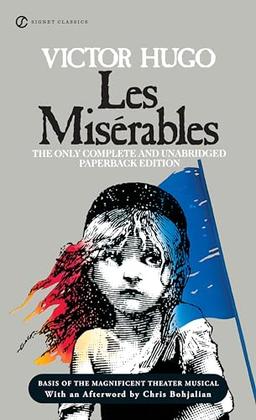
Best valueFahnestock & MacAfee · 1987
A modern revision of the original 1862 Wilbour translation — complete, faithful, and the cheapest complete Les Mis in print. It doesn't have Donougher's polish or notes, but if you want the whole book for under ten dollars, this is the honest answer.
The free classicCharles E. Wilbour · 1862
Charles Wilbour translated Les Misérables in 1862, the same year Hugo published it, so it's contemporaneous — and out of copyright, so it's free online. Complete and faithful, in a formal 19th-century English that some find fitting and some find heavy going. Not a bad way to sample before you commit to a print copy.