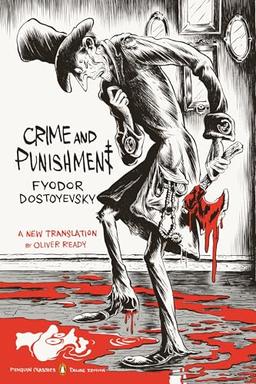
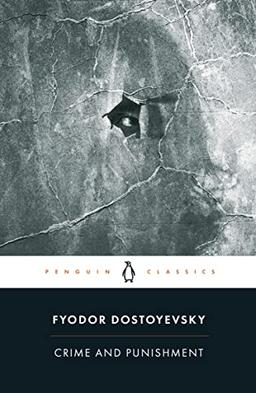
Best for mostOliver Ready · 2014
Ready's 2014 version is the one I'd hand a first-time reader now. It's colloquial and fast, it catches Dostoevsky's black humor and Raskolnikov's feverish, lurching voice better than the older translations, and the notes are genuinely useful. It's also about the closest of the modern versions to how the Russian actually reads. This is where I'd start.
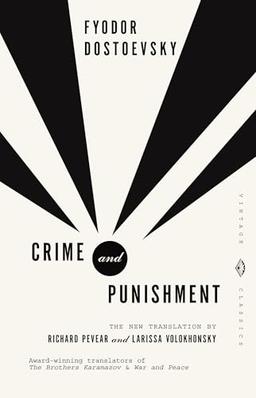
Most faithfulPevear & Volokhonsky · 1992
Pevear and Volokhonsky work close to the Russian and keep its deliberate roughness — the repetitions, the broken rhythms — instead of smoothing them into polished English. Some readers find that the truest Dostoevsky; others find it awkward going. It's the most argued-over translation in print, which is worth knowing before you commit.
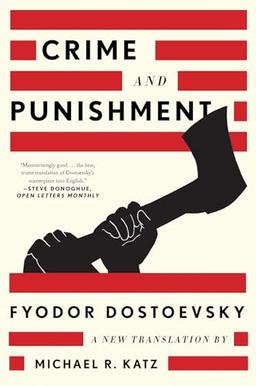
NewestMichael R. Katz · 2018
The 2018 translation, and the freshest competition for Ready. Reviewers called it the truest Dostoevsky yet into English and praised how it carries the voice. If you want the newest scholarship and a modern ear, this and Ready are the two to weigh against each other.
The classicConstance Garnett · 1914
Constance Garnett's 1914 version introduced Dostoevsky to the English-speaking world and was the standard for seventy years. It reads smoothly — sometimes too smoothly; she tidied some of his rough edges and the English is Edwardian. But it's complete, it's a few dollars, and the text is free online. A fine way to start if you don't want to overthink it.
Best balanceDavid McDuff · 1991
David McDuff's Penguin translation is the steady middle: faithful to the Russian without the friction some readers hit in P&V, and carried by Penguin's strong introduction and notes. If Ready feels too loose and P&V too rough, McDuff splits the difference.